
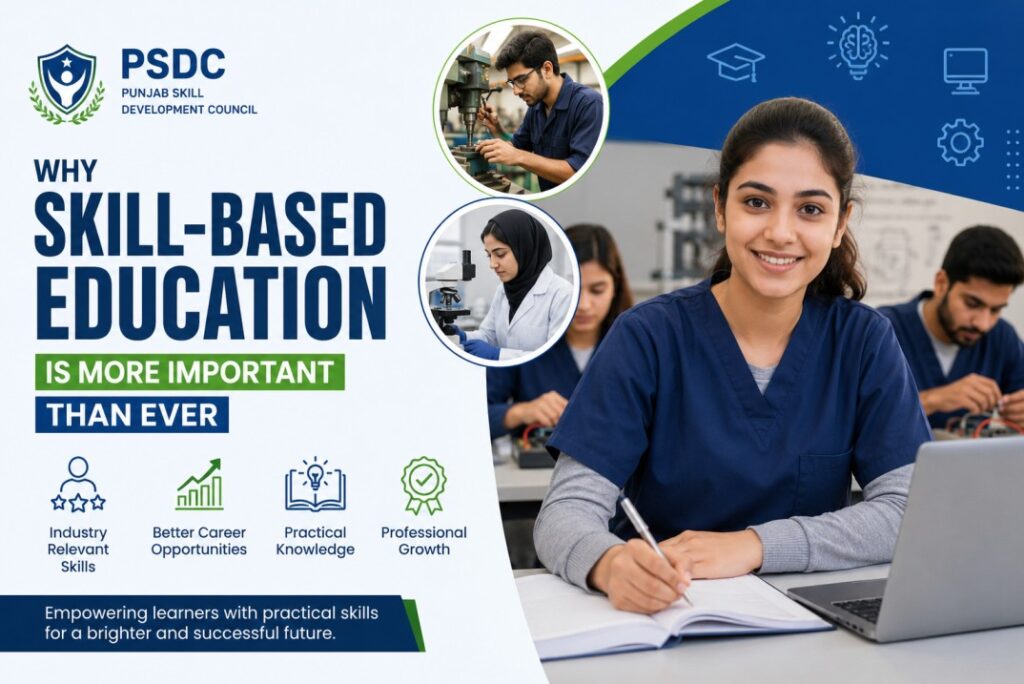

In today’s rapidly evolving world, education is no longer limited to earning academic qualifications. Employers increasingly seek individuals who possess practical skills, industry knowledge, and the ability to perform effectively in real-world situations. This shift has made skill-based education one of the most valuable approaches to learning and career development.
Organizations such as PSDC are helping students gain the practical competencies needed to succeed in competitive industries. By focusing on hands-on training and professional development, skill-based education bridges the gap between classroom learning and workplace requirements.
What Is Skill-Based Education?
Skill-based education is a learning approach that emphasizes the development of practical abilities, technical expertise, and job-ready competencies. Unlike traditional education, which often focuses primarily on theoretical knowledge, skill-based learning prepares students to apply what they learn in real-life situations.
This type of education is designed to help individuals:
- Develop practical workplace skills
- Improve problem-solving abilities
- Gain industry-specific knowledge
- Increase employability
- Build confidence and professional competence
The goal is to ensure that learners are prepared not only to understand concepts but also to use them effectively in their chosen careers.
The Growing Demand for Skilled Professionals
Technological advancements, industry transformation, and changing workforce needs have significantly increased the demand for skilled professionals. Employers today value candidates who can contribute immediately without requiring extensive additional training.
Many industries, including healthcare, information technology, business administration, technical services, and vocational trades, require workers with specialized skills and practical experience.
Employers often look for individuals who can:
- Adapt to changing technologies
- Work efficiently in professional environments
- Communicate effectively
- Solve practical problems
- Demonstrate technical proficiency
As a result, skill-based education has become a key factor in career success.
Benefits of Skill-Based Education
Enhanced Employability
One of the greatest advantages of skill-based education is improved job readiness. Students who acquire practical skills are often better prepared to meet employer expectations and perform effectively from the beginning of their careers.
Practical Learning Experience
Skill-focused programs emphasize hands-on training, allowing students to gain real-world experience before entering the workforce. This practical exposure helps learners understand workplace challenges and develop confidence in their abilities.
Career Advancement Opportunities
Professional skills and certifications can open doors to better job opportunities, promotions, and career growth. Employers frequently prefer candidates who possess verified skills and relevant training.
Increased Confidence
Students who master practical skills often feel more confident when facing professional responsibilities. Confidence plays an important role in interviews, workplace performance, and long-term career development.
How Skill-Based Education Supports Economic Growth
A skilled workforce benefits not only individuals but also society as a whole. When people possess the skills needed by industries, businesses become more productive, innovation increases, and employment opportunities expand.
Skill-based education contributes to:
- Reduced unemployment rates
- Improved workforce productivity
- Stronger economic development
- Enhanced industry competitiveness
- Greater opportunities for youth employment
By investing in skills development, educational institutions help build a stronger and more sustainable economy.
The Role of PSDC in Professional Skill Development
PSDC is committed to empowering students through professional training and practical education. By offering career-oriented programs and industry-relevant learning opportunities, PSDC helps learners acquire the competencies needed to succeed in today’s job market.
The organization’s focus includes:
- Professional and vocational training
- Practical skill development
- Industry-focused learning programs
- Career advancement opportunities
- Certificate verification and educational credibility
Through these initiatives, PSDC supports students in achieving their educational and professional goals.
Key Skills Every Student Should Develop
Regardless of their chosen field, students can benefit from developing essential workplace skills, including:
- Communication skills
- Critical thinking and problem-solving
- Time management
- Teamwork and collaboration
- Digital literacy
- Professional ethics
- Adaptability and continuous learning
These skills remain valuable across various industries and contribute significantly to long-term career success.
Conclusion
Skill-based education has become more important than ever in a world where employers prioritize practical knowledge and workplace readiness. By focusing on hands-on learning, professional competencies, and industry-relevant training, students can improve their employability and build successful careers.
Organizations like PSDC play an important role in preparing learners for the future by providing quality education, practical training, and opportunities for professional growth. As industries continue to evolve, investing in skill development remains one of the most effective ways to achieve personal success and contribute to economic progress.